Views: 0 Author: Site Editor Publish Time: 2026-01-06 Origin: Site


You want your room to sound good. This is true if you have a home studio, work in an office, or just relax at home. Acoustic treatment helps you control noise. It also makes sound better in any room. In 2026, more people use acoustic solutions. Cities are getting busier. Open-plan offices are more common now. Green building trends are growing. New rules make acoustic comfort very important. Think about what you want from your studio, home, or any room. Acoustic treatment can help you get what you want.
Acoustic treatment makes rooms sound better by controlling noise and echoes.
Use panels, bass traps, and diffusers to fix different sound problems.
Good sound helps you focus, relax, and enjoy music or speech more.
Choose eco-friendly materials for a greener and smarter room.
Try DIY or hire a pro for the best acoustic treatment results.
You want your room to sound nice and easy to listen to. Acoustic treatment helps you control how sound moves in your room. It helps stop noise, echoes, and sound bouncing around. This makes music, talking, and other sounds clearer and more fun to hear. You can use acoustic treatment in many places like studios, offices, schools, and homes. You can make your room better with small changes or by using special designs.
Acoustic treatments change how sound acts in your room. You use special materials and shapes to soak up, spread out, or block sound waves. Here are the main science ideas that make acoustic treatments work well:
Reflection Mitigation: You use acoustic foam to soak up sound energy. This stops sound from bouncing back and mixing with the main sound.
Echo and Reverb Reduction: The foam turns sound energy into heat. This helps cut down on echoes and reverb.
Frequency-Based Sound Optimization: You pick different foam thicknesses for different sound types.
Acoustic Materials and Advanced Panel Design: You choose materials that control sound in special ways. Things like foam and mineral wool soak up sound by turning it into heat.
Periodic Structures: You use special panels to spread out and move sound waves. This helps with certain sound types.
Absorption and Diffusion: You mix materials that soak up sound and surfaces that spread it out. This makes sound better all over your room.
Tip: You can use different acoustic treatments together for the best sound. Try using both things that soak up sound and things that spread it out.
You have three main tools for acoustic treatment: acoustic panels, bass traps, and diffusers. Each one helps fix a different sound problem in your room.
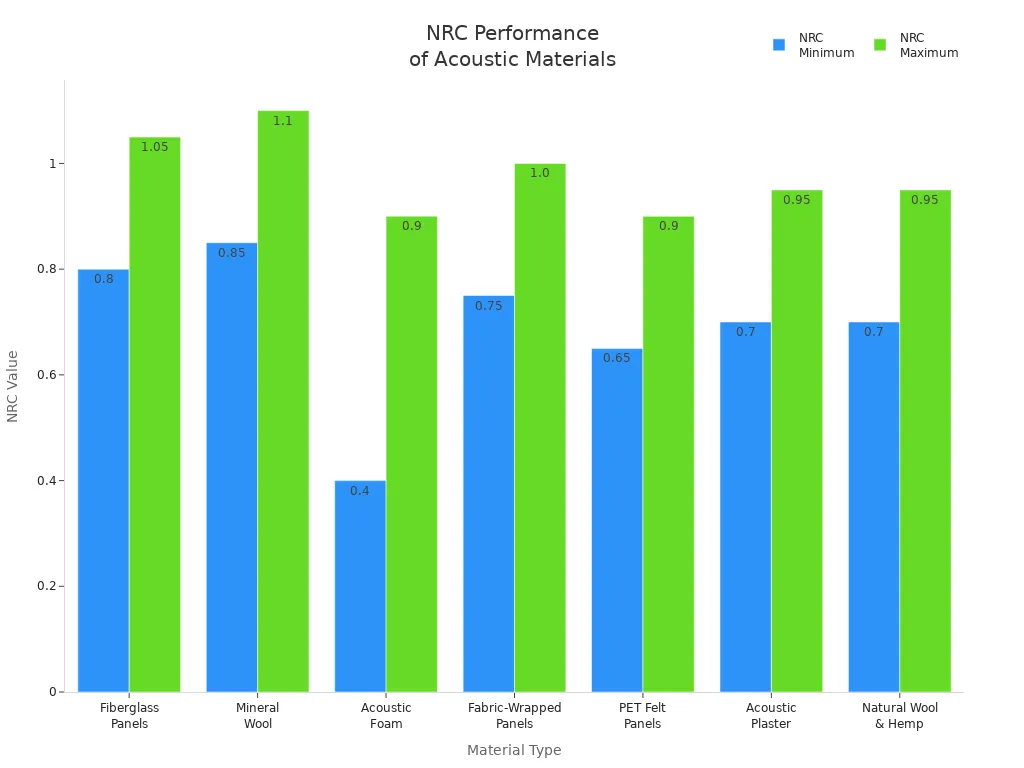
Material Type | Performance (NRC) | Applications | Benefits |
|---|---|---|---|
Fiberglass Panels | 0.80–1.05 | Recording studios, offices, classrooms | High absorption per inch; Class A fire rating. |
Mineral Wool (Rockwool) | 0.85–1.10 | Bass traps, wall panels, ceilings | Superior low-frequency control and rigidity. |
Acoustic Foam | 0.40–0.90 | Studios, vocal booths, small rooms | Lightweight, affordable, easy to apply. |
Fabric-Wrapped Panels | 0.75–1.00 | Offices, schools, commercial interiors | Decorative, durable, and customizable. |
PET Felt Panels | 0.65–0.90 | Sustainable offices, classrooms, lobbies | Eco-friendly, non-itchy, color-customizable. |
Acoustic Plaster | 0.70–0.95 | Theaters, lobbies, performance halls | Seamless finish with high acoustic value. |
Natural Wool & Hemp | 0.70–0.95 | Sustainable homes, studios, wellness spaces | Renewable, breathable, and chemical-free. |
Acoustic panels soak up sound. You use them to make your room quieter and cut down on echo.
Bass traps help with deep sounds. You put them in corners to stop bass from building up and making your room sound messy.
Diffusers spread out sound waves. You use them to stop sound from bouncing back and making weird echoes. This helps keep sound clear and natural.
You can pick from many materials for panels, bass traps, and diffusers. Thicker panels soak up deeper sounds and help with bass. How thick and heavy the material is also matters. Sometimes, lighter materials work better for deep sounds if you use thick panels. Acoustic foam is good for high sounds, but you need bass traps for deep sounds.
Acoustic diffusers help spread out sound. They stop problems like weird echoes and sound mixing. This makes sound clearer and helps you hear all the details.
In music rooms, diffusers help mix sounds and make groups sound better together.
Panels cut down on echo. Diffusers spread sound out evenly. This makes talking easier to understand and music sound more real.
Good diffusion gives you a nice place to listen. You get clear sound, and it feels deep and wide.
Good sound diffusion products help your room sound even. This is good if you listen for a long time.
You can use acoustic treatment to make your room sound better for music, meetings, or relaxing. You get more comfort and clear sound when you pick the right panels, bass traps, and diffusers.
You can choose from many types of acoustic treatments to improve your room. Each type works best for certain problems and spaces. Let’s look at the main types of acoustic treatments you might use in your home, studio, or office.
Acoustic panels help you control sound in your room. You can find fabric-wrapped acoustic panels in offices and studios. These panels look good and work well. Acoustic foam panels are light and easy to install. They work best in open spaces and studios. Some panels use fiberglass, mineral wool, or PET felt. These materials have high absorption, as shown in the table below.
Frequency (Hz) | Absorption Coefficient |
|---|---|
125 | 0.45 |
500 | 0.95 |
2000 | 1.05 |
4000 | 1.10 |

Bass traps help you control deep sounds in your room. You place them in corners or near ceiling clouds. In small rooms, bass can build up and make music sound muddy. Bass traps absorb these low sounds and make your room clear.
Place bass traps in corners and wall-ceiling spots for best results.
Use more or bigger traps in large rooms.
Diffuser panels spread sound out in your room. This helps you avoid echoes and keeps music or speech clear. Wood diffuser panels look great in restaurants or studios. The design of diffuser panels, like quadratic residue or curved surfaces, helps sound move evenly.
Design Principle | Impact on Sound Dispersion |
|---|---|
Quadratic Residue Sequence | Homogeneous sound distribution |
Surface Curvature | Reduces sharp reflections |
Groove Incorporation | Improves sound spread |
You might need portable acoustic treatments for flexible spaces. Movable acoustic partitions and mobile absorbers work well in offices, studios, or even at home. Products like waterproof panels and ceiling clouds help in outdoor or wet areas. You can use these in home theaters, balconies, or outdoor events. Portable panels let you change your room’s sound without permanent changes.
Tip: Try different types of acoustic treatments together for the best sound in your room.
You want sound to be clear in your room. Good acoustic treatment helps you hear music and speech better. You can notice every detail without noise getting in the way. When you use the right acoustic treatments, you fix problems like echo and dead spots. You also stop muddiness in the sound. This makes your studio or home theater sound more professional.
In places for shows, clear sound keeps people interested and happy. You can see this at the Maoming Stadium in China. You can also see it at the Cyprus Apostolos Pavlos Church. FDB Audio’s work in these places shows why good sound is important. It matters for both music and talking.
Here is how different acoustic features change what the audience hears:
Acoustic Characteristic | Impact on Audience Experience |
|---|---|
Sound Quality | Makes music and speech better, so people enjoy listening. |
Reverberation Time | The right amount makes sound rich and clear for everyone. |
Sound Distribution | Even sound means all people can hear well. |
Mitigation of Acoustic Defects | Fewer echoes and dead spots make the audience more comfortable. |
Audience Engagement | Better sound helps people pay attention and feel more involved. |
You can make every seat in a room sound good. You can also make your studio or home feel nicer and more fun. Good sound makes events special and helps you enjoy music or speech more.
You spend a lot of time in your room, office, or studio. Too much noise can make you tired and stressed. Acoustic treatment helps you control noise and makes your space calm. When you fix sound problems, you help your mind focus and relax.
Studies show that most workers do better in quiet places. Half of bosses say noise makes work harder. If you hear other people talking, you may get less done. Sound-masking technology can help you focus and remember things better.
Here are some facts about how good sound helps in different places:
Study Context | Findings |
|---|---|
Educational Settings | Good sound helps students do better and feel less stress from noise. |
Healthcare Facilities | Quiet rooms help patients get better by lowering noise. |
Workplaces | Too much noise makes people less productive; sound-masking helps people focus and remember more. |
Open-plan Offices | Hearing others talk makes it hard to work, especially in big offices. |
General Workplace | Most workers do better in quiet places; half of bosses say noise is a big problem. |
You can see these good results in real life. FDB Audio has put acoustic solutions in government buildings and offices. These projects show how acoustic treatment can help everyone feel better and work better.
You live and work in new kinds of spaces. Hybrid workspaces, outdoor events, and open-plan offices are more common now. You need flexible solutions for these new places. Acoustic treatment helps you change your room for meetings, music, or relaxing.
You can use portable panels, waterproof speakers, and weather-resistant products. FDB Audio has these options for outdoor events and tough spaces. You can see their products in stadiums, churches, and public places around the world.
Here are some reasons you need acoustic treatment in modern spaces:
You want fewer distractions in hybrid workspaces.
You need clear sound for outdoor events, even if it rains.
You want your studio or home to look nice and sound good.
You need to fix sound problems in big or open rooms.
Note: Acoustic treatment is more important every year. You can feel better, stay healthy, and enjoy your space more by picking the right acoustic solutions.
You can trust brands like FDB Audio to help you with sound problems. Their big projects show how new technology and design can make any room sound its best.
You want your room to look nice and sound good. Now, you can pick acoustic panels that fit your style. You can choose the size, shape, and color you like. Some panels let you add pictures or logos. This helps your room show your story. The fabric on panels can match your room and still let sound through. This makes sound better. You can pick materials that fit your taste. This helps your room feel special and cozy.
Pick from many colors and shapes.
Add your own art or logo.
Match panels to your room’s look.
Use fabric that fits your space.
You want to help the planet and have a green room. Many panels now use recycled or plant-based stuff. Some companies make PET panels from old plastic bottles. These panels are light, strong, and help with sound. New smart panels can sense noise and change how they work. You see these new ideas in homes and studios today. Ceiling clouds and diffuser panels also use green materials. This helps you fix sound and care for the earth.
Tip: Pick acoustic treatments with green materials and smart features. This gives you better sound and helps the planet.
You can try to fix sound problems yourself or hire someone. DIY projects cost less but take time and tools. You can use foam, ceiling clouds, or panels at home or in a studio. If you miss spots or use the wrong stuff, sound can leak or bounce. Pros know where to put panels, ceiling clouds, and diffusers for the best sound. They help you avoid mistakes and make sure your room sounds great.
Installation Type | Cost Range | Performance Outcome |
|---|---|---|
DIY | £500 - £2000 | Works if you do it right, but may not fix all sound problems without expert help. |
Professional | £2000 - £15,000+ | Gives better results with expert setup and design for your room or studio. |
You get the best sound and look when you balance money, needs, and style. Waterproof and tough panels and ceiling clouds work outside or in hard places. This means you can have good sound anywhere.
You can make your room better with acoustic treatment. Studies say acoustic solutions lower stress and help you work better. This works at home, in offices, or in public places. First, think about what you want your room to do. Test the sound by playing music you know. Put panels, bass traps, and diffusers in your room. Move them around to see what sounds best. If you spend money on acoustic comfort, you get good things back. You will feel healthier and save energy for a long time.
Remember: If your room has good treatment, you can relax, work, and have more fun at home.
Step | Action |
|---|---|
1 | Decide what you want your room for |
2 | Put your speakers in the best spot |
3 | Add panels and bass traps to your room |
4 | Test the sound and change things for comfort |
You should place panels on the walls where sound bounces the most. Try putting them behind speakers and at the first reflection points. This helps your room sound clear and balanced.
If you hear deep sounds that boom or feel heavy, your room may need bass traps. Corners often collect these sounds. Adding bass traps can help you get cleaner music or speech.
Yes, you can use acoustic treatment in any room. Bedrooms, offices, and studios all benefit from better sound. You just need to pick the right products for your space and needs.
Many panels come in different colors and shapes. You can choose panels that match your style. Some even let you add art or logos, so your room looks great and sounds better.


